Table of Contents
Why Business Management Software Beats Spreadsheets for Service Businesses
In a world where spreadsheets are still widely used for tracking customers, sales, and financials, many small businesses find themselves stuck in a cycle of manual data entry and error-prone reporting. While tools like Excel or Google Sheets have long been the go-to for managing data, they weren’t designed to handle the complexity and real-time collaboration modern service-based companies need.
This is where WorkDash—a purpose-built business management software designed for Australian service businesses—changes the game. Unlike spreadsheets like Excel, WorkDash provides integrated CRM, project management, and financial management tools that streamline workflows, automate follow-ups, and keep teams connected without the chaos of multiple sheets, tabs, and versions.
If you’re still using spreadsheets to manage jobs, clients, and invoices, this article will show you exactly why modern CRM and business management software not only beats spreadsheets but completely transforms how you operate, scale, and deliver great customer experiences.
Why Spreadsheets Are Still Popular Among Small Businesses
Even in 2025, spreadsheets are still one of the most common tools for small businesses. They’re easy to access, flexible, and familiar. From bookkeeping to simple project tracking, Excel spreadsheets and Google Sheets offer a quick start for business owners managing budgets, staff schedules, or customer data.
However, this convenience hides several challenges. As your business grows, those rows and columns multiply—and so do mistakes. Spreadsheets contain errors, lack version control, and require constant manual data entry. When multiple users edit a file, data can easily be overwritten, duplicated, or lost altogether.
While spreadsheets work for short-term tasks, they simply weren’t built for long-term data management or collaboration across teams.
What Happens When Businesses Outgrow Spreadsheets?
Many growing businesses start with spreadsheets like Excel but soon discover their limits. As operations expand, teams struggle with multiple spreadsheets, each containing different versions of customer information or sales data.
This leads to inefficiency and confusion, as managers waste time reconciling numbers instead of making decisions. Spreadsheets also make it difficult to track sales, manage workflow, or monitor financial management metrics in real-time.
When your business grows, a software solution like WorkDash becomes essential. It helps centralize customer relationship management (CRM), projects, invoicing, and asset management in one cloud-based platform—ensuring there’s always one version of the truth.
Why Spreadsheets Can Quickly Become a Bottleneck
Spreadsheets can quickly become a source of friction instead of flexibility. The more data you add, the slower and less manageable they become. Files grow large, formulas break, and simple updates require hours of admin work.
Moreover, spreadsheets don’t integrate with your other tools. You can’t automate follow-ups, generate invoices, or manage customer communications without exporting and importing data across different apps.
WorkDash, however, allows you to automate these processes, eliminating repetitive tasks and freeing up your team’s time and resources for what matters most—serving customers and growing your business.
Why CRM and Business Management Software Beats Spreadsheets
When comparing CRM systems and spreadsheets, the advantages of a dedicated solution are clear. While spreadsheets like Excel rely on manual updates, a modern CRM automatically tracks interactions, stores customer data, and updates records in real-time.
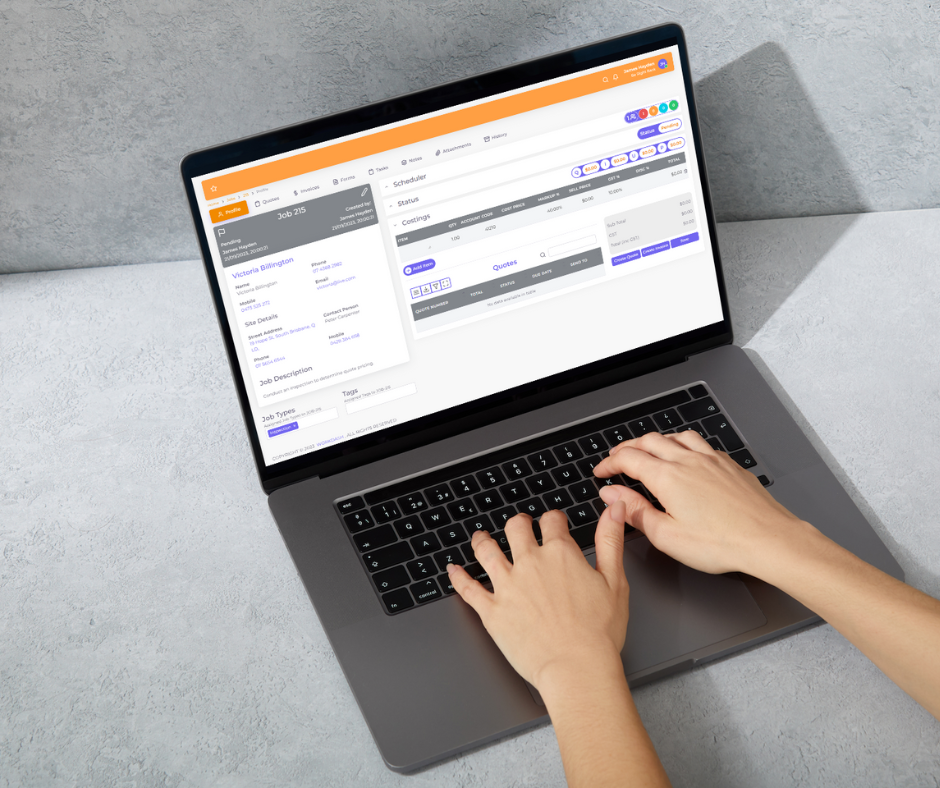
WorkDash combines the power of CRM, job management, and financial tools in one platform. This means your finance team, technicians, and managers all share access to real-time insights—without juggling multiple files or risking duplication errors.
Simply put, business management software beats spreadsheets because it offers automation, accuracy, and scalability—all in one.
How Manual Data Entry Hurts Productivity and Accuracy
Every business owner knows the pain of manual data entry. It’s tedious, time-consuming, and full of risks. Each time data is entered manually, there’s a chance for typos, missing cells, or misaligned figures.
This impacts productivity and leads to spreadsheets containing errors that can distort reports or invoices. Even a misplaced decimal can cost a small business thousands in lost revenue or credibility.
With WorkDash, you can automate data collection from your CRM, invoices, and projects. This means fewer human errors, more accurate forecasts, and time-saving automation that lets teams focus on meaningful work rather than repetitive tasks.
The Hidden Costs of Managing Customer Data in Spreadsheets
At first glance, using spreadsheets seems cost-effective. But hidden costs add up—lost time, miscommunication, and missed opportunities due to inaccurate customer information or delayed follow-ups.
Spreadsheets cannot offer the visibility or automation of a true CRM. You can’t view historical data, track the full customer relationship, or trigger automated reminders for overdue invoices and upcoming appointments.
WorkDash changes this by storing all customer data in one integrated system. Every email, task, and invoice connects to a single client record, so your team can see the full picture of each relationship—instantly and seamlessly.
How Automation Solves the Spreadsheet Problem
Automation is the key differentiator between spreadsheets and modern business management software.
WorkDash’s automation tools let you build workflows that automatically generate quotes, assign tasks, and issue invoices once projects are approved. Automation also ensures consistency—every customer experience follows the same best practices and quality standards.
This automate-first approach doesn’t just improve productivity; it enhances financial management, helps maintain compliance, and reduces the risk of duplication or lost data. It’s the smarter way to manage your service operations.
Why Cloud-Based CRMs Are Better Than Local Spreadsheets
Spreadsheets like Excel or Google Sheets rely heavily on local storage or shared links, which can cause version control issues when multiple users access them. One wrong save, and critical data can be overwritten or lost.
By contrast, WorkDash operates as a cloud-based system, giving your team secure, role-based access to all data from any mobile device. Updates happen in real-time, ensuring everyone sees the most current information.
This eliminates the “Who has the latest file?” problem, allowing your team to make actionable decisions faster and more confidently.
How Spreadsheets Fall Short in Bookkeeping and Financial Management
While spreadsheets are often used for bookkeeping, they lack automation for complex financial management tasks like recurring invoices, expense tracking, or revenue forecasting.
A dedicated tool like WorkDash integrates accounting software features such as invoice automation, payment tracking, and budget visibility into one dashboard. This integration allows business owners to see their financial health at a glance without exporting data between systems.
For service-based companies juggling multiple clients, WorkDash’s automation makes it easy to send reminders, generate reports, and maintain a clear audit trail—all without the hassle of spreadsheets.
Key Benefits of Moving from Spreadsheets to Business Management Software
Switching from spreadsheets to WorkDash’s all-in-one business management software offers numerous key benefits:
Automation eliminates manual data entry and improves accuracy.
CRM integration centralizes all customer information for better service.
Bookkeeping and invoicing are simplified through built-in financial tools.
Real-time dashboards enhance visibility into operations and finances.
Cloud access allows multiple users to collaborate securely.
AI tools support smarter decision-making and reporting.
These improvements lead to higher productivity, fewer mistakes, and more time to focus on growth instead of data maintenance.
Why WorkDash Is the Smarter Choice for Growing Service Businesses
Unlike ERP systems designed for large enterprises, WorkDash is built for service-based small businesses that need flexibility and affordability.
It combines CRM, workflow, financial management, and automation into a single, easy-to-use platform. As your business grows, WorkDash grows with you—without the need to juggle multiple spreadsheets or disconnected tools.
From asset management to follow-up automation, every feature in WorkDash is designed to organise operations and replace inefficient spreadsheets with smart, scalable solutions.
Key Takeaways: Why Business Management Software Beats Spreadsheets
Spreadsheets are flexible but become inefficient, inaccurate, and unscalable as your business grows.
WorkDash offers an integrated, cloud-based CRM and management platform that replaces spreadsheets with automation and real-time insights.
Automation and workflow tools reduce manual data entry, improve productivity, and eliminate duplication.
Bookkeeping, invoicing, and customer relationship management are streamlined through one connected system.
WorkDash helps small businesses save time, improve accuracy, and focus on delivering better customer experiences.
In conclusion, while spreadsheets like Excel have served businesses for decades, they can no longer keep up with the speed and complexity of today’s service industries. Modern business management software like WorkDash not only beats spreadsheets in performance and reliability but gives your team the tools to automate, collaborate, and grow with confidence.
👉 Explore WorkDash.software today to see how you can replace outdated spreadsheets with a smarter, all-in-one solution built for Australian service businesses.