Table of Contents
Disconnected Systems vs Business Management Software: Why WorkDash Delivers Real Business Efficiency
Running a modern business with disconnected systems is one of the most common — and costly — problems growing companies face today. Many businesses rely on multiple tools stitched together over time: one for CRM, another for project management, another for accounting, and countless spreadsheets in between. While this approach may seem flexible at first, it quietly drains productivity, increases errors, and limits visibility.
This article is worth reading if you are evaluating business management software, struggling with multiple systems, or questioning the real cost of running your business across disconnected software platforms. We’ll compare WorkDash with fragmented tool stacks, explain why traditional ERP systems often miss the mark, and show how a unified business management platform improves business efficiency without complexity. Importantly, WorkDash is not an ERP—it’s a modern business management platform designed for growing businesses.
Article Outline
What Are Disconnected Systems and Why Do Businesses End Up With Them?
The Hidden Cost of Using Multiple Systems
How Disconnected Software Impacts Business Operations
Why Data Entry and Manual Processes Kill Efficiency
ERP vs Business Management Software: What’s the Difference?
How WorkDash Centralises CRM, Workflow, and Operations
Automation vs Fragmentation: Which Supports Growth?
Decision-Making with Real-Time Data vs Guesswork
Customer Experience and Data Consistency Across Systems
The True Cost Comparison: WorkDash vs Disconnected Systems
What Are Disconnected Systems and Why Do Businesses End Up With Them?
Disconnected systems are separate software applications that do not share data seamlessly. Each system stores its own information, forcing teams to manually transfer or duplicate data across platforms. Over time, this creates silos that fragment operations.
Most businesses don’t plan to use disconnected software systems. It happens gradually. A CRM is added to manage leads, accounting software handles finances, and project management tools track delivery. As the business grows, more tools are introduced to solve immediate problems—without considering integration.
In a modern business environment, disconnected systems become a barrier rather than a solution. Systems don’t talk to each other, workflows break down, and teams lose confidence in their data.
The Hidden Cost of Using Multiple Systems
The real cost of using multiple systems is not just subscription fees. It includes wasted time, duplicated effort, and missed opportunities. Employees spend hours switching between software systems, copying data, and reconciling inconsistencies.
When data is fragmented across platforms, errors increase. Manual data entry introduces mistakes, delays, and frustration. These inefficiencies compound as transaction volume grows.
Operational costs rise silently. Businesses often underestimate how much productivity is lost due to disconnected systems. Over time, inefficiency becomes normalised—even though it directly impacts business efficiency and profitability.
How Disconnected Software Impacts Business Operations
Disconnected software disrupts business operations by creating information silos. Teams work from different versions of the truth, leading to inconsistency and confusion across departments.
For example, sales data may live in a CRM, while job details exist in project management tools, and invoices sit in accounting software. Without integrated systems, teams lack a full picture of operations.
This fragmentation limits collaboration and slows decision-making. Leaders are forced to make strategic decisions based on incomplete information, increasing risk in a fast-paced business environment.
Why Data Entry and Manual Processes Kill Efficiency
Manual data entry is one of the biggest sources of inefficiency in businesses using disconnected systems. Employees manually transfer data between systems, increasing the risk of errors and inconsistencies.
Every time teams manually transfer data between systems, productivity drops. Staff spend less time on high-value work and more time maintaining systems that should be automated.
Over time, manual processes create bottlenecks. Instead of supporting growth, systems slow it down. Businesses spend more time managing software than serving customers.
ERP vs Business Management Software: What’s the Difference?
Traditional ERP systems aim to centralise everything—but often at the cost of flexibility, speed, and usability. ERP platforms are typically built for enterprise organisations with complex requirements and large IT budgets.
Business management software like WorkDash is designed differently. It focuses on core business needs without unnecessary complexity. Unlike ERP systems, it is easier to deploy, configure, and scale.
WorkDash provides integrated CRM, workflow, automation, and operational visibility—without forcing businesses into rigid enterprise processes. This makes it ideal for growing businesses that need efficiency, not overhead.
How WorkDash Centralises CRM, Workflow, and Operations
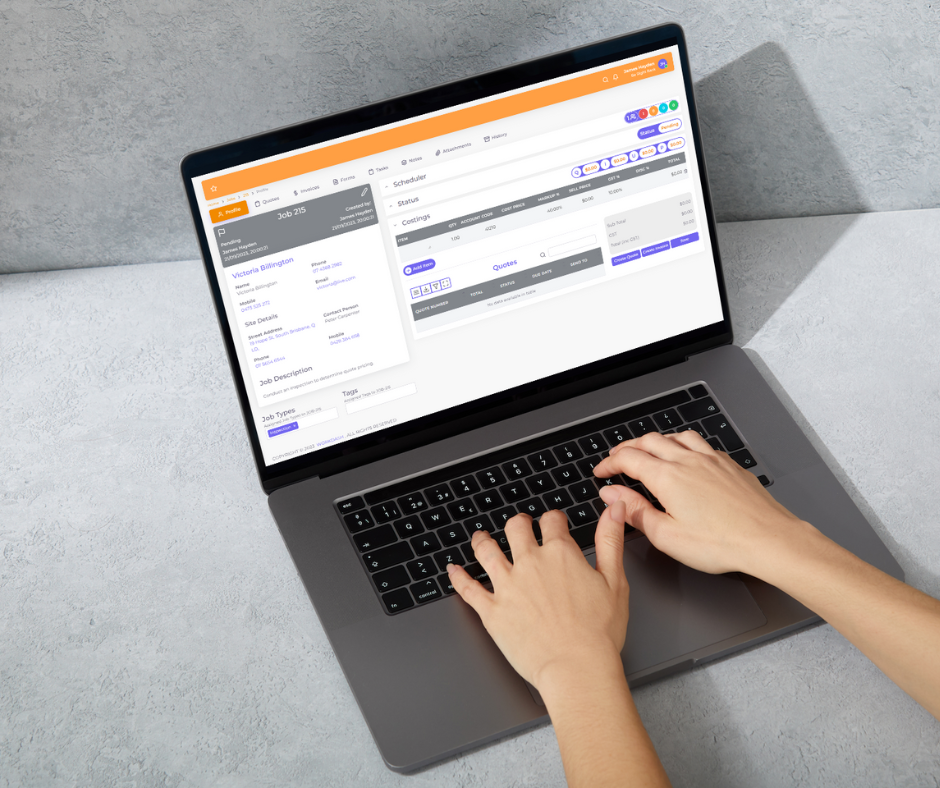
WorkDash is designed from the ground up as a unified system, not a collection of stitched-together tools. It centralises CRM, workflow, project management, and business operations into one platform.
Customer data flows seamlessly across the system. Sales, operations, and finance teams work from the same real-time data, eliminating silos and inconsistency.
By replacing fragmented systems with one integrated platform, WorkDash enables teams to collaborate effectively and gain a complete view of business systems.
Automation vs Fragmentation: Which Supports Growth?
Fragmented systems require manual processes to keep them connected. In contrast, automation thrives in integrated systems like WorkDash.
With automation built into workflows, repetitive tasks disappear. Updates, approvals, and notifications happen automatically—without human intervention.
This shift dramatically improves business efficiency. Instead of reacting to system limitations, businesses proactively manage operations and support growth without adding complexity.
Decision-Making with Real-Time Data vs Guesswork
Disconnected systems limit access to real-time data. Reports are delayed, inconsistent, or incomplete, forcing leaders to rely on assumptions rather than insights.
WorkDash provides real-time visibility across business operations. Decision-making improves because leaders can see performance, workflow status, and customer activity in one place.
Better data leads to better decisions. Businesses move from reactive management to proactive strategy—an essential advantage as the business grows.
Customer Experience and Data Consistency Across Systems
Customer experience suffers when systems don’t share data. Information gets lost, duplicated, or outdated, leading to missed follow-ups and poor service.
With WorkDash, customer data is centralised and consistent across workflows. Every interaction is visible, improving customer satisfaction and trust.
A unified system ensures that customer relationship management is proactive rather than reactive, supporting long-term growth and retention.
The True Cost Comparison: WorkDash vs Disconnected Systems
The true cost of disconnected systems includes wasted time, operational inefficiency, increased errors, and lost opportunities. While individual tools may seem affordable, the combined impact is significant.
WorkDash reduces operational costs by eliminating redundancy, streamlining workflows, and improving visibility. Employees spend less time managing systems and more time delivering value.
For growing businesses, replacing fragmented systems with a single business management platform is not just a technology decision—it’s a strategic one.
Key Takeaways: WorkDash vs Disconnected Systems
Disconnected systems fragment data and workflows
Multiple systems increase inefficiency and operational costs
Manual data entry introduces errors and wasted time
ERP systems are often too complex for growing businesses
Business management software focuses on usability and efficiency
WorkDash centralises CRM, workflow, and operations
Automation replaces manual processes and bottlenecks
Real-time data improves decision-making
Unified systems enhance customer experience
WorkDash delivers business efficiency without ERP complexity
Disconnected software systems slow businesses down—often without owners realising the full impact. By moving to a unified business management platform like WorkDash, businesses eliminate fragmentation, improve efficiency, and gain clarity across operations. It’s not about replacing tools—it’s about replacing chaos with control.