Table of Contents
Management Software and Business Management Software with WorkDash: How Moving Beyond a Spreadsheet Keeps Your Business Running
Short summary:
Missed jobs and lost revenue don’t usually happen because teams don’t care—they happen because information is scattered, follow-ups slip, and visibility is poor. This article explains how WorkDash helps businesses avoid missed jobs and lost revenue by replacing fragile spreadsheet workflows with modern business management software. You’ll learn how management software brings real-time clarity, automates follow-ups, integrates billing, and strengthens customer experience—so your team can work confidently, protect cash flow, and keep the business running without the daily scramble.
Article Outline
Why Do Businesses Still Rely on a Spreadsheet—and What Goes Wrong?
What Is Management Software and How Is It Different from a Spreadsheet?
How Does WorkDash Help Prevent Missed Jobs with Real-Time Visibility?
How Can Business Management Software Streamline Workflow and Reduce Manual Data Entry?
How Does Cloud-Based Access and Mobile Use Keep Teams Aligned?
How Do Customer Data and Customer Information Improve Follow-Up and Customer Satisfaction?
How Do Automated Reminders, Timelines, and Dashboards Stop Missed Opportunities?
How Does Integration with Accounting Software Improve Billing, Invoices, and Financial Health?
How Does Security, Reliability, and Access Control Protect Your Operations?
How Does WorkDash Support Productivity, Professionalism, and Operational Efficiency?
1. Why Do Businesses Still Rely on a Spreadsheet—and What Goes Wrong?
Many teams start with a spreadsheet because it’s familiar, quick to set up, and feels flexible. In the early days, a spreadsheet can hold job lists, contact details, and basic notes. But as a modern business grows, that approach becomes fragile. You end up juggling multiple versions, copying data between tabs, and relying on memory for followup. That’s when missed jobs and missed opportunities begin to appear.
The real issue is not effort—it’s structure. When information is scattered, you lose visibility. One person updates a cell, another works from yesterday’s copy, and suddenly you’re dealing with lost data or outdated job info. This creates downtime, confusion, and rework. Teams waste time reconciling changes, and important steps fall through the cracks.
WorkDash was designed to replace that brittle system with a reliable management system. Instead of chasing cells and links, you get a single source of truth. This shift from a spreadsheet to business management software is what allows teams to ensure nothing important is forgotten and that day-to-day operations stay predictable.
2. What Is Management Software and How Is It Different from a Spreadsheet?
Management software is built to organise work, not just record it. A spreadsheet stores data; management software coordinates actions. That means it can automate steps, connect related records, and show you what needs attention right now. In practice, this difference is huge for business management because it turns passive lists into active processes.
With business management software, your workflow is no longer dependent on manual updates alone. You can automate follow-ups, generate alerts, and maintain a clear timeline for every job. Instead of relying heavily on memory, the system helps ensure the right actions happen at the right time. This reduces errors, improves reliability, and supports better customer experience.
WorkDash is an all-in-one solution for teams that have outgrown ad-hoc tools. Software like WorkDash is built to integrate data, tasks, and billing seamlessly. The result is not just better records, but a calmer, more predictable operation where your right tools support your business needs.
3. How Does WorkDash Help Prevent Missed Jobs with Real-Time Visibility?
Missed jobs usually start with missed information. A change isn’t seen, a message is overlooked, or a task isn’t assigned. WorkDash helps by providing real-time visibility across jobs, schedules, and responsibilities. When everyone can see the same status, confusion disappears and accountability improves.
With a single dashboard, teams can track progress, see upcoming appointments, and understand priorities at a glance. This visibility is not just convenient—it’s preventative. When something is about to slip, you see it early and can act. That’s how WorkDash helps stop problems before they become lost revenue.
WorkDash provides clear job info, a shared timeline, and status updates that are always current. This real-time view supports better decision-making, improves customer satisfaction, and reduces the chance of surprises. It’s a practical way to ensure your team stays aligned and focused on delivery.
4. How Can Business Management Software Streamline Workflow and Reduce Manual Data Entry?
Manual data entry is slow, error-prone, and expensive in terms of time. When people have to copy details between tools, mistakes creep in and context gets lost. A modern business management software platform is designed to streamline this process by connecting related steps into a single flow.
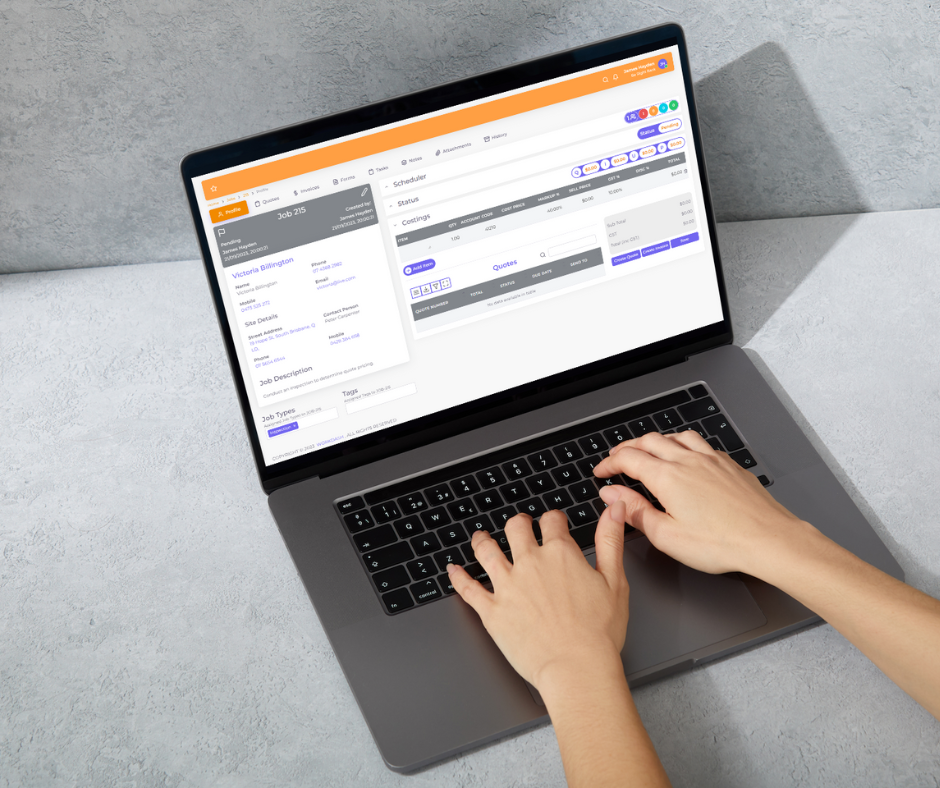
In WorkDash, you can manage jobs, assign tasks, track progress, and prepare billing without retyping the same information. This workflow approach reduces duplication and helps ensure records stay accurate. When data flows through the system, teams spend less time fixing errors and more time delivering value.
This is also where automation makes a difference. You can automate reminders, updates, and routine actions so nothing depends on memory alone. Over time, this structure saves time, reduces hassle, and supports consistent performance—especially as your volume of work increases.
5. How Does Cloud-Based Access and Mobile Use Keep Teams Aligned?
A cloud-based system changes how teams collaborate. Instead of being tied to one computer or office, everyone works from the same live data. Whether a technician is on a mobile device or an admin is in the office, updates are immediate and shared.
This real-time access is critical for avoiding missed jobs. If a schedule changes or a note is added, the whole team sees it. There’s no waiting for someone to send a file or update a sheet. That keeps the business moving and reduces downtime caused by miscommunication.
WorkDash offers this flexibility while keeping things easy-to-use. Teams can update records in the field, check details on the go, and maintain momentum. The result is better coordination, faster responses, and a more reliable service experience for customers.
6. How Do Customer Data and Customer Information Improve Follow-Up and Customer Satisfaction?
Missed revenue often comes from missed followup. When customer data is scattered, it’s easy to forget a renewal, overlook a request, or lose track of a conversation. A central system for customer information changes that by keeping every interaction connected to the job and the account.
With WorkDash, you can manage customer records, review service history, and schedule followups with confidence. This structure improves customer relationship management because nothing lives in someone’s inbox alone. Every note, task, and agreement is visible to the team.
The payoff is better customer satisfaction and stronger relationships. Customers feel remembered, issues are resolved faster, and your team can provide a more consistent experience. That consistency is a direct guard against missed opportunities and reputation damage.
7. How Do Automated Reminders, Timelines, and Dashboards Stop Missed Opportunities?
People don’t miss work because they don’t care—they miss it because it’s invisible at the wrong moment. Automated reminders and alerts solve that by bringing the right task to the surface at the right time. This is where automation becomes a revenue protector.
In WorkDash, reminders can prompt followup, highlight upcoming appointments, or flag overdue steps. A shared dashboard shows what needs attention today, while a clear timeline keeps everyone aligned on what’s next. This combination turns planning into action.
These features also enhance accountability and transparency. When tasks are visible and time-bound, the team responds faster and with more confidence. The result is fewer gaps, fewer surprises, and a measurable reduction in missed opportunities.
8. How Does Integration with Accounting Software Improve Billing, Invoices, and Financial Health?
Operational gaps often show up first in money. If work is completed but not billed, or if invoice details are wrong, cash flow suffers. By choosing a platform that can integrate with accounting software, you connect delivery to billing and payment tracking.
WorkDash can help you generate invoices from real job data, reducing errors and delays. When finance and operations share the same source of truth, you protect financial health and reduce the back-and-forth between teams. This also supports better managing budgets and forecasting.
This integration isn’t just about speed—it’s about trust. Accurate invoices, clear records, and consistent processes build professionalism and confidence with customers and stakeholders. That trust is a long-term asset for any business.
9. How Does Security, Reliability, and Access Control Protect Your Operations?
As businesses move away from spreadsheets, concerns about security are natural. A modern platform addresses this with encryption, access control, and role-based permissions. This ensures the right people see the right data—and nothing more.
WorkDash is built with reliability and assurance in mind. Centralised data management reduces the risk of lost data, while controlled access protects sensitive information. This structure supports compliance, accountability, and peace of mind for leadership.
Security also supports continuity. When systems are dependable, teams don’t lose momentum to outages or uncertainty. That stability is a quiet but critical factor in keeping operations smooth and preventing costly disruptions.
10. How Does WorkDash Support Productivity, Professionalism, and Operational Efficiency?
At its core, WorkDash is about helping teams do their best work without friction. By replacing fragmented tools with a single management software platform, you boost productivity and reduce the daily hassle of coordination. The system helps assign tasks, track progress, and keep priorities clear.
This structure also lifts operational efficiency. Fewer handoffs, fewer errors, and clearer ownership mean your team spends more time delivering and less time fixing. Over time, that consistency builds professionalism and a stronger brand reputation.
Most importantly, WorkDash is scalable. As your business grows, the system grows with you—supporting new services, more customers, and higher volume without chaos. It’s a practical way to ensure your business stays resilient, organised, and ready for what’s next.
Key Takeaways: What to Remember
Relying on a spreadsheet increases the risk of missed jobs, errors, and lost revenue.
Business management software turns passive lists into active, reliable processes.
WorkDash helps teams gain real-time visibility, preventing surprises and delays.
Automation, reminders, and dashboards reduce followup gaps and missed opportunities.
Centralised customer data and customer information improve customer experience and satisfaction.
Cloud-based access and mobile use keep teams aligned wherever they work.
Integration with accounting software strengthens billing, invoices, and financial health.
Security features like encryption and access control protect operations and data.
Better workflows, clearer ownership, and fewer errors boost productivity and professionalism.
Moving from a spreadsheet to WorkDash helps keep the business running—and protects revenue.