The Onboarding Process That Drives Productivity: How to Use WorkDash for an Effective Employee Onboarding Process and Onboard Staff Fast
Table of Contents The Onboarding Process That Drives Productivity: How to Use WorkDash for an Effective Employee Onboarding Process and Onboard Staff Fast Short summary:A great tool is only as powerful as the team using it. If you want your people to adopt WorkDash quickly, confidently, and correctly, you need a clear onboarding process. This guide shows you how to onboard your team to WorkDash job management fast with an effective onboarding approach that boosts productivity, helps new starters feel confident, and turns the employee onboarding process into a repeatable advantage. You’ll get practical steps, checklists, and a rollout plan that fits real teams—because WorkDash is a business management platform (not an ERP) designed to be simple, fast, and scalable. Article Outline What Is the Onboarding Process and Why Does It Matter for a New Employee? How Do You Design an Effective Onboarding Experience for New Hires Using WorkDash? How
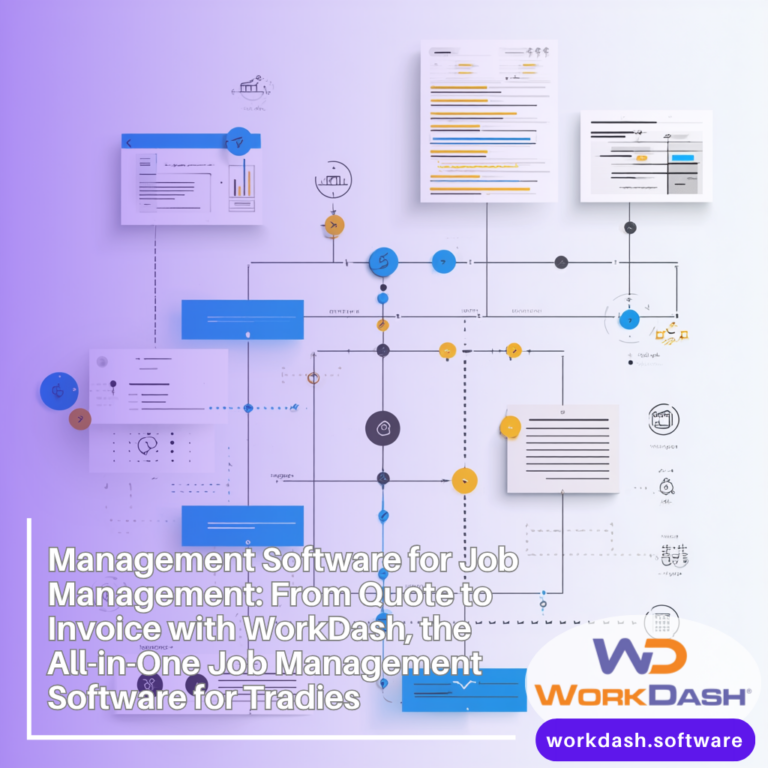
Management Software for Job Management: From Quote to Invoice with WorkDash, the All-in-One Job Management Software for Tradies
Table of Contents Management Software for Job Management: From Quote to Invoice with WorkDash, the All-in-One Job Management Software for Tradies Short summary:Winning work is only the beginning. The real challenge is taking a quote all the way to a final invoice—on time, on budget, and with full visibility. This comprehensive guide explains from quote to completion how WorkDash manages every job stage using an all-in-one business management approach. You’ll see how this job management system connects quoting, scheduling, task execution, and billing on one platform, how it helps tradies and service teams automate admin, streamline workflows, and protect cash flow, and why WorkDash is business management software (not an ERP) built for real-world operations. Article Outline Why Does the Quote Stage Matter So Much for Job Management and Profitability? How Does WorkDash Turn an Original Quote into a Live Job in One Platform? What Makes Job Management Software Better
WorkDash Management Software for Productivity: A Comprehensive Guide to Job Management, Business Management, and Streamlining Field Service Operations So Your Team Runs Smoothly
Table of Contents WorkDash Management Software for Productivity: A Comprehensive Guide to Job Management, Business Management, and Streamlining Field Service Operations So Your Team Runs Smoothly Short summary:Running a modern service business means coordinating office staff, field teams, schedules, invoices, and customer expectations—without losing time to admin chaos. This comprehensive guide shows how to use WorkDash to streamline field and office operations, using practical steps, real-world workflows, and proven management software patterns. You’ll learn how to streamline job management, automate routine tasks, get real-time visibility, improve customer satisfaction, and keep your field service team and office aligned—so your operation truly runs smoothly and scales with confidence. Article Outline Why Streamlining Matters: How Can WorkDash Improve Productivity Across Daily Operations? How Does WorkDash as Management Software Unify Workflow and Business Management? How Do You Manage Jobs Better with a Job Management System and Task Management Tools? Can You Automate Field Service
Administrative Management Software and Workforce Management: How to Reduce Administrative Burden, Cut Workload, and Improve Workplace Efficiency
Table of Contents Administrative Management Software and Workforce Management: How to Reduce Administrative Burden, Cut Workload, and Improve Workplace Efficiency Short summary:Administrative work keeps businesses running—but too much of it slows everything down. From payroll and compliance to approvals, time tracking, and reporting, the administrative burden quietly drains time and energy across teams. This comprehensive guide explains the role of job management tools in reducing admin burden, shows how management software and workforce management software help reduce administrative workload, and connects these ideas to WorkDash—a business management platform (not an ERP) designed to streamline operations. You’ll learn how to automate repetitive processes, protect compliance, improve productivity, and build a calmer, more efficient workplace. Article Outline Why Is Administrative Work So Heavy in Modern Organizations? What Is Management Software and How Does It Reduce Administrative Burdens? How Does Workforce Management Software Streamline Workload and Improve Productivity? Can Automation Really Reduce Administrative
Spreadsheet vs Management Software: Why Job Management Software Wins and How to Move from Spreadsheets to a Better Workflow
Table of Contents Spreadsheet vs Management Software: Why Job Management Software Wins and How to Move from Spreadsheets to a Better Workflow Short summary:If you’re still using spreadsheets to manage jobs, schedules, and invoices, you’re not alone—but you’re also carrying hidden risk. This comprehensive guide explains software vs spreadsheets in real operational terms and shows why management software beats spreadsheets for job management. We’ll compare Excel-style tracking to modern job management software, highlight where spreadsheets break down, and show how WorkDash—a business management platform (not an ERP)—helps you make the switch, gain real-time visibility, reduce manual data entry, and build a scalable workflow for growth. Article Outline Why Has the Spreadsheet Been the Go-To Tool for So Long? Spreadsheet vs Management Software: What’s the Real Difference? Why Does Software vs Spreadsheets Matter for Job Management? How Do Automation and Real-Time Updates Change Daily Operations? Where Do Excel and Multiple Spreadsheets
Management Software and Business Management Software with WorkDash: How Moving Beyond a Spreadsheet Keeps Your Business Running
Table of Contents Management Software and Business Management Software with WorkDash: How Moving Beyond a Spreadsheet Keeps Your Business Running Short summary:Missed jobs and lost revenue don’t usually happen because teams don’t care—they happen because information is scattered, follow-ups slip, and visibility is poor. This article explains how WorkDash helps businesses avoid missed jobs and lost revenue by replacing fragile spreadsheet workflows with modern business management software. You’ll learn how management software brings real-time clarity, automates follow-ups, integrates billing, and strengthens customer experience—so your team can work confidently, protect cash flow, and keep the business running without the daily scramble. Article Outline Why Do Businesses Still Rely on a Spreadsheet—and What Goes Wrong? What Is Management Software and How Is It Different from a Spreadsheet? How Does WorkDash Help Prevent Missed Jobs with Real-Time Visibility? How Can Business Management Software Streamline Workflow and Reduce Manual Data Entry? How Does Cloud-Based
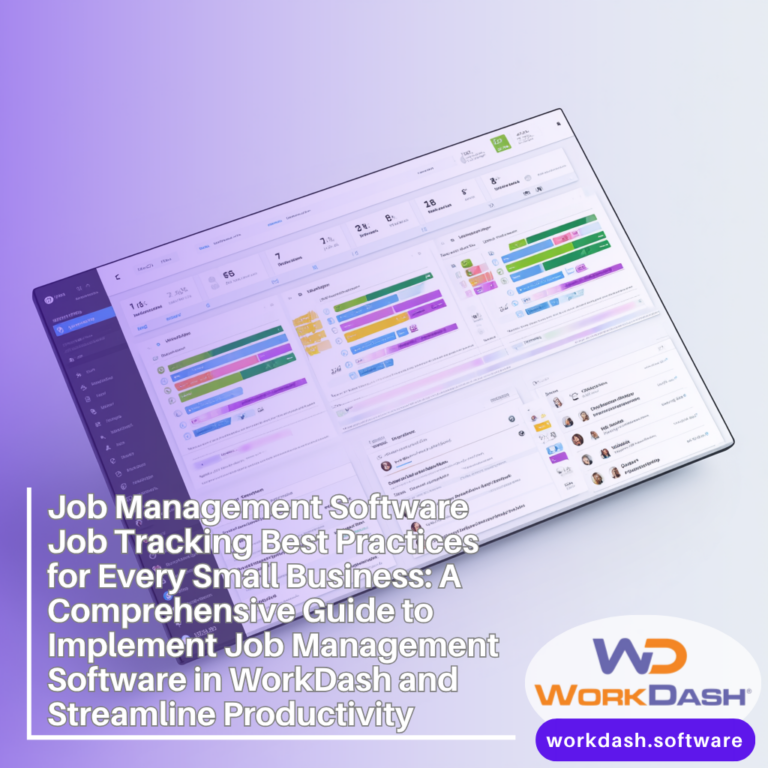
Job Management Software Job Tracking Best Practices for Every Small Business: A Comprehensive Guide to Implement Job Management Software in WorkDash and Streamline Productivity
Table of Contents Job Management Software Job Tracking Best Practices for Every Small Business: A Comprehensive Guide to Implement Job Management Software in WorkDash and Streamline Productivity Short summary:Job tracking can feel messy when you’re running a small business—jobs change, team members are busy, and updates get lost. This comprehensive guide explains job tracking best practices for small businesses using WorkDash, including how to implement job management software, improve productivity, and streamline business processes with real-time visibility. You’ll learn practical steps to ensure jobs stay on schedule, job details stay accurate, and business owners can make decisions with confidence—using WorkDash as software for your business (and importantly, a business management platform, not an ERP). Article Outline What Does Job Tracking Mean in a Small Business and Why Is It Essential? How Does Job Management Software Help Small Businesses Streamline Operations? Why WorkDash for Job Tracking: What Makes It the Right
Invoice Automation with Invoicing Software: How Quote and Invoice Tools Help Sole Traders Get Paid Faster and Streamline Business
Table of Contents Invoice Automation with Invoicing Software: How Quote and Invoice Tools Help Sole Traders Get Paid Faster and Streamline Business Short summary:If you run a service business, trade business, or work as a sole trader, you already know that creating every invoice manually eats into your day. Chasing payments, fixing mistakes, and handling admin slows growth and hurts cash flow. This guide explains how invoicing software and automation transform the quote and invoice process, how you can save time, create professional invoices, and get paid faster, and why platforms like WorkDash make invoicing and accounting simpler without being an ERP. If you want fewer admin headaches and faster payments, this article is worth reading. Article Outline Why Is the Invoice Process Still a Big Problem for Small Business and Sole Traders? What Is Invoicing Software and How Does It Automate Quotes and Invoices? How Does Automation Help You
Management Software and Job Management Software: How Software Transforms Business Operations to Streamline Productivity
Table of Contents Management Software and Job Management Software: How Software Transforms Business Operations to Streamline Productivity Short summary:Modern service companies and trade businesses are under constant pressure to do more with less—more jobs, more customers, tighter schedules, and higher expectations. This is where management software and job management software step in. In this guide, we explore how job management software transforms business operations, how it helps teams streamline work, improve productivity, and gain visibility, and why platforms like WorkDash are becoming essential for growing service businesses. If you want to streamline operations, improve collaboration, and run a smarter business, this article is worth your time. Article Outline What Is Management Software and Why Do Service Businesses Need It Today? What Is Job Management Software and How Does It Support Field Service and Office Teams? How Does Job Management Software Help You Streamline Workflow and Daily Operations? Why Is Real-Time
Field Services, Real-Time Scheduling, and Job Management Software: How Field Service Management Software Improves Modern Field Operations
Table of Contents Field Services, Real-Time Scheduling, and Job Management Software: How Field Service Management Software Improves Modern Field Operations Short summary:Field services businesses live and die by how well they plan, assign, and complete work in the field. From scheduling technicians to tracking job progress and keeping customers informed, the pressure on service teams has never been higher. This article explains why field service teams need centralised job management software, how field service management software transforms daily operations, and how a modern platform like WorkDash helps streamline workflows, improve visibility, and deliver reliable service. If you manage technicians, field workers, or service appointments, this guide will show you exactly why a centralised, real-time approach is no longer optional. Article Outline What Are Field Services and Why Are They So Hard to Manage at Scale? What Is Field Service Management Software and How Does It Support Field Operations? Why Is
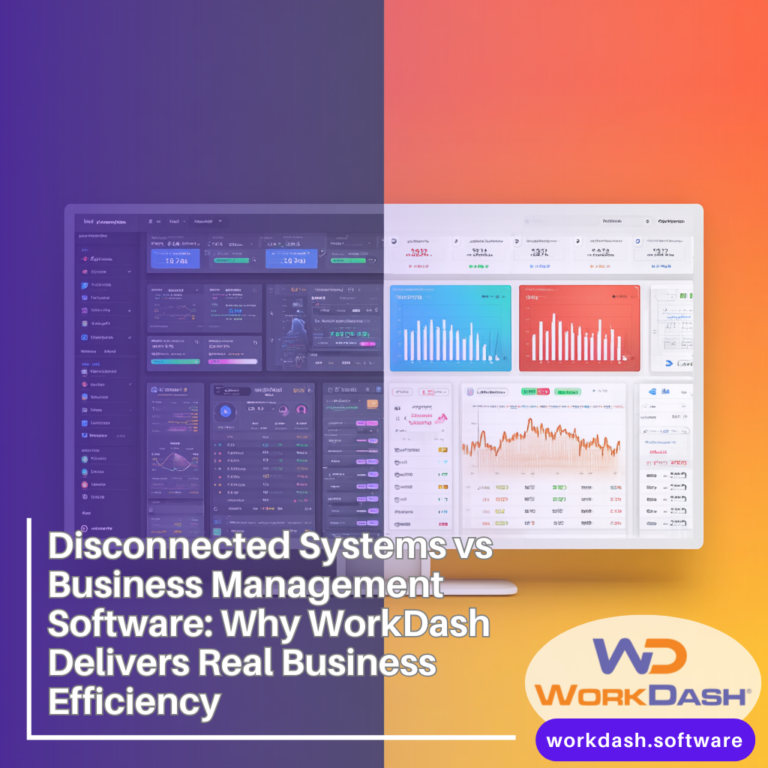
Disconnected Systems vs Business Management Software: Why WorkDash Delivers Real Business Efficiency
Table of Contents Disconnected Systems vs Business Management Software: Why WorkDash Delivers Real Business Efficiency Running a modern business with disconnected systems is one of the most common — and costly — problems growing companies face today. Many businesses rely on multiple tools stitched together over time: one for CRM, another for project management, another for accounting, and countless spreadsheets in between. While this approach may seem flexible at first, it quietly drains productivity, increases errors, and limits visibility. This article is worth reading if you are evaluating business management software, struggling with multiple systems, or questioning the real cost of running your business across disconnected software platforms. We’ll compare WorkDash with fragmented tool stacks, explain why traditional ERP systems often miss the mark, and show how a unified business management platform improves business efficiency without complexity. Importantly, WorkDash is not an ERP—it’s a modern business management platform designed for
How to Scale Your Service Business Without Increasing Admin Work
Table of Contents How to Scale Your Service Business Without Increasing Admin Work Scaling a service business is one of the biggest challenges business owners face. Demand grows, revenue increases, but so does admin, workload, and complexity. Many people believe growth automatically means hiring more staff, adding more tools, and working longer hours. The reality is different. You can scale your service business without increasing admin work, without hiring prematurely, and without burning out. This article is worth reading if you run a service-based business and want to grow sustainably. It explains, step by step, how to scale smarter by using automation, repeatable systems, and the right business management platform. You’ll learn proven strategies to increase capacity, protect customer experience, and grow your business without losing control—all while keeping admin under control. Article Outline What Does Scaling Really Mean for a Service Business? Why Scaling a Service-Based Business Often Fails