Table of Contents
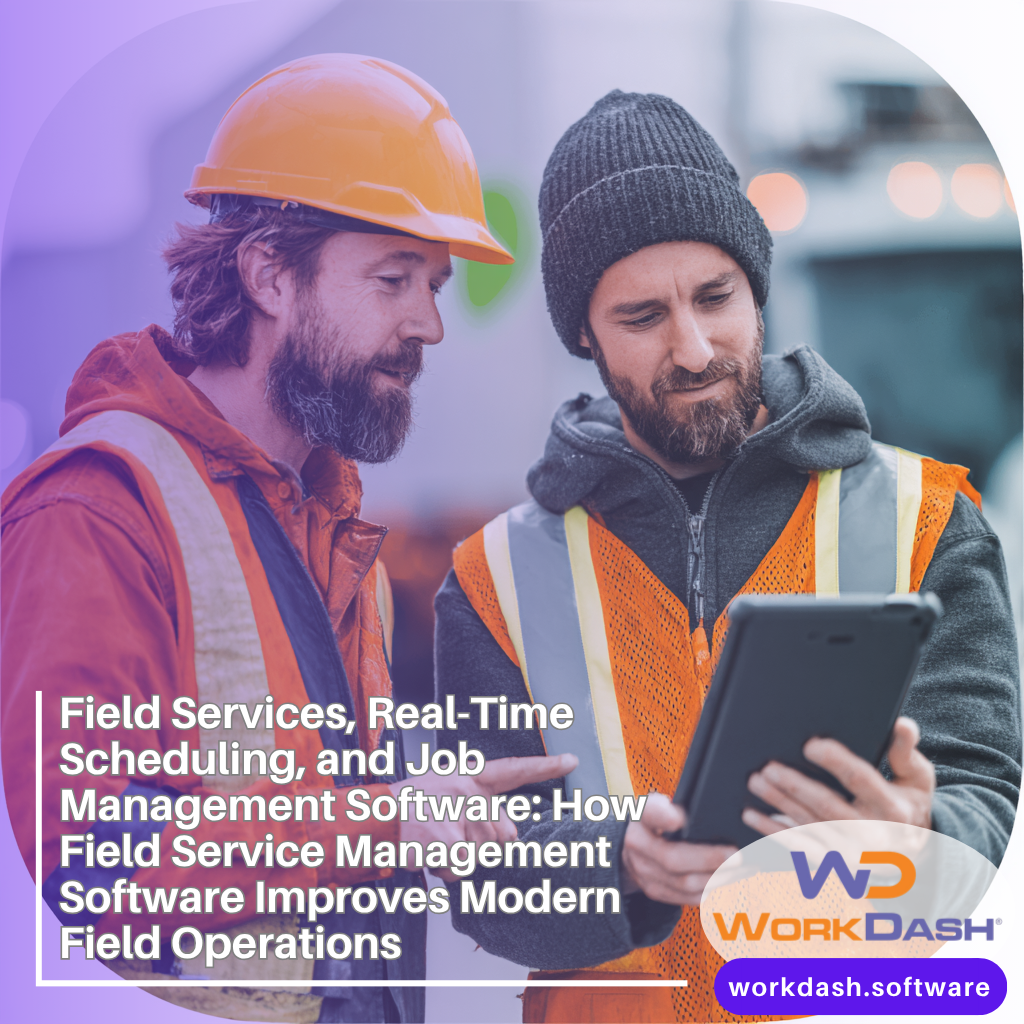
Field Services, Real-Time Scheduling, and Job Management Software: How Field Service Management Software Improves Modern Field Operations
Short summary:
Field services businesses live and die by how well they plan, assign, and complete work in the field. From scheduling technicians to tracking job progress and keeping customers informed, the pressure on service teams has never been higher. This article explains why field service teams need centralised job management software, how field service management software transforms daily operations, and how a modern platform like WorkDash helps streamline workflows, improve visibility, and deliver reliable service. If you manage technicians, field workers, or service appointments, this guide will show you exactly why a centralised, real-time approach is no longer optional.
Article Outline
What Are Field Services and Why Are They So Hard to Manage at Scale?
What Is Field Service Management Software and How Does It Support Field Operations?
Why Is Real-Time Scheduling So Important for Technicians and Service Teams?
What Are the Benefits of Field Service Management for Service Efficiency and Customer Satisfaction?
How Does Centralised Job Management Software Improve Workflow and Productivity?
What Features You Need in a Modern Field Service Solution?
How Do Software Integrations and Mobile Apps Support Field Service Technicians?
How Does Job Scheduling and Work Order Management Reduce Errors and Delays?
How Can Management Software Enhance Visibility Across Office and Field Teams?
Why Service Businesses Are Moving to Platforms Like WorkDash for Complete Field Service Management
1. What Are Field Services and Why Are They So Hard to Manage at Scale?
Field services cover a wide range of industries, from trades and maintenance to inspections, repairs, and installations. In simple terms, field services are any services delivered at a customer’s location rather than in an office or workshop. This includes electrical work, plumbing, pest control, equipment servicing, cleaning, IT support, and many other kinds of field service work. As service businesses grow, the complexity of managing field operations grows with them.
One of the biggest challenges is coordinating people, time, and information. A field team often includes multiple technicians working across different locations, each with different skills, tools, and schedules. Without a centralised system, managers rely on spreadsheets, phone calls, and disconnected tools. This makes it hard to keep a clear schedule, track every job, and ensure each technician has access to what they need. Over time, this manual management process creates gaps in visibility and slows down service operations.
This is where the pressure really shows. Field service companies must respond to service requests quickly, manage service appointments, and still deliver reliable service. When everything is scattered across emails, paper job sheets, and separate apps, even small mistakes can delay job completion. A centralised approach using field service management software helps bring structure to managing field services and creates a foundation for scalable, predictable growth.
2. What Is Field Service Management Software and How Does It Support Field Operations?
Field service management software is designed to support the full lifecycle of field service operations, from receiving a service request to scheduling a technician, tracking work orders, and closing out the job. In many businesses, this type of system is also referred to as FSM or FSM software because it focuses specifically on field service management rather than generic office tasks.
At its core, field service management software helps centralise information into one centralised system. Instead of juggling multiple tools, service teams can manage job details, service history, work order management, and scheduling in one place. This makes it easier to coordinate between office and field teams and ensures that everyone is working from the same data. For growing field services, this kind of structure is essential to maintain operational efficiency.
Platforms like WorkDash take this a step further by acting as a complete field service solution and business management platform, not an ERP. WorkDash focuses on helping service businesses streamline workflows, manage technicians, and improve service delivery without the heavy complexity of traditional management systems. The result is software that helps field service professionals focus more on doing great work and less on chasing information.
3. Why Is Real-Time Scheduling So Important for Technicians and Service Teams?
In modern field services, speed and accuracy matter. Customers expect fast responses, and service teams need to adapt quickly when priorities change. This is why real-time scheduling and real-time updates are so important. When a job is assigned, rescheduled, or completed, everyone should see that change immediately.
For a technician in the field, having real-time access to their schedule and job details through a mobile app means fewer phone calls and less confusion. For managers, real-time visibility into job status and job progress makes it easier to make smart decisions throughout the day. Instead of reacting to problems after they happen, teams can move from reactive to proactive service.
A strong field service management software platform supports real-time job updates and helps ensure that schedules jobs logically and efficiently. This improves the scheduling process, reduces downtime, and helps field workers make better use of their time. Over weeks and months, this kind of real time coordination has a direct impact on productivity and customer satisfaction.
4. What Are the Benefits of Field Service Management for Service Efficiency and Customer Satisfaction?
When people talk about the benefits of field service management, they often focus on speed and organisation—but the impact goes much deeper. One of the biggest benefits of field service management is the ability to streamline service operations from end to end. Instead of relying on disconnected tools, service teams can manage every job in one place, from the first call to final invoicing.
This level of organisation directly improves service efficiency. Technicians arrive with the right information, the right tools, and a clear understanding of what needs to be done. Work order data, service details, and even inventory management can be connected, which helps reduce errors and avoid repeat visits. Over time, this consistency builds trust with customers and strengthens customer satisfaction.
Just as importantly, field service management software helps service businesses measure and improve performance using service KPIs. With better visibility into field service operations, managers can see what’s working, what’s not, and where processes can be improved. This is how management software improves not just daily operations, but long-term business results as well.
5. How Does Centralised Job Management Software Improve Workflow and Productivity?
A centralised approach to job management changes how work flows through a business. Instead of information living in emails, notebooks, and separate tools, everything is stored in one centralised system. This makes it easier to manage work orders, track job progress, and ensure that every job is completed correctly and on time.
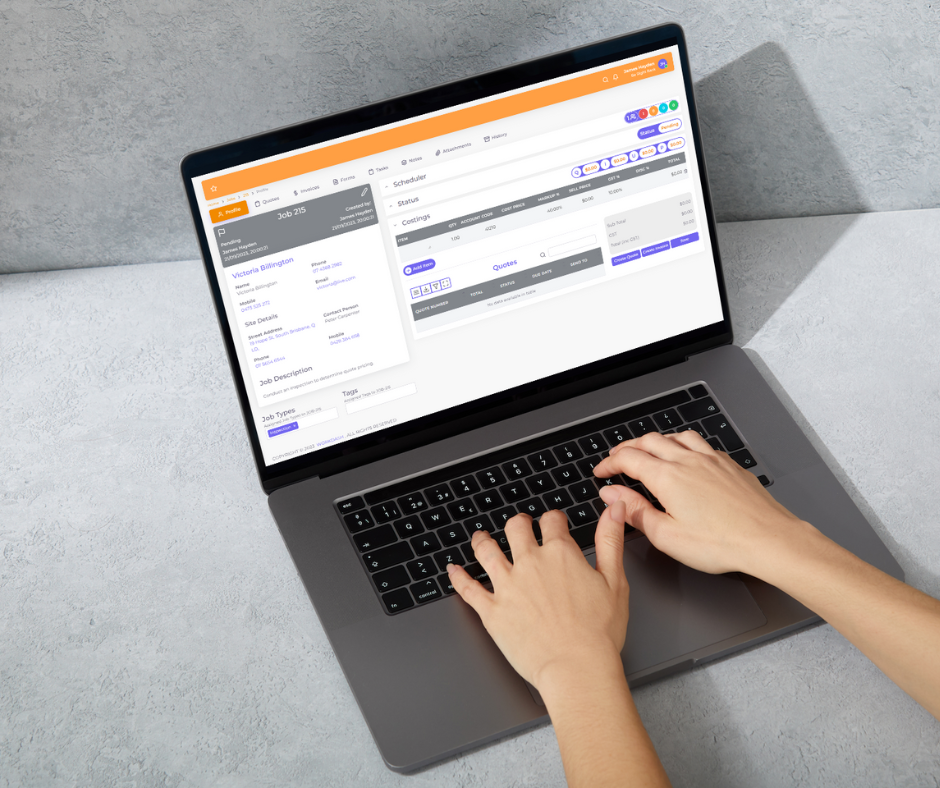
When job management software is used properly, it creates a clear workflow that everyone can follow. Office staff can create and assign work, field technicians can update job status from the mobile field, and managers can see the full picture without chasing updates. This kind of structure helps streamline daily operations and improves productivity across the entire field service team.
WorkDash is built around this idea of centralising and simplifying. It is not an ERP, but a practical business management platform designed for service businesses that need clarity, speed, and control. By bringing job tracking, scheduling, and communication into one place, management software enhances how teams work together and how quickly they can respond to customer needs.
6. What Features You Need in a Modern Field Service Solution?
When evaluating a field service solution, it’s important to look beyond basic scheduling. The features you need should support the full management process of your field services business. This includes job scheduling, work order management, service history, customer relationship management, and reporting.
A strong field service software platform should also support mobile access. A reliable mobile app allows field service technicians to view job sheets, update job status, and access service details while on site. This ensures that field service workers always have access to what they need, even when they are away from the office.
Other important features include software integrations with tools like CRM software, accounting, or inventory management systems. When software allows different systems to work together, it reduces manual work and helps keep data accurate. In short, the right management software can transform how field services operate by connecting people, processes, and information into one complete field service environment.
7. How Do Software Integrations and Mobile Apps Support Field Service Technicians?
Modern field services rely heavily on mobility. Field technicians are constantly moving between jobs, and they need tools that move with them. This is where a well-designed mobile app becomes essential. It allows technicians to see their schedule, review job details, update work order information, and even capture customer signatures on site.
Software integrations play an equally important role. When field service management software connects with customer relationship management, billing, or inventory systems, it removes the need for double data entry. This not only saves time but also helps reduce errors that come from manual processes. The result is smoother service operations and more accurate records.
For service businesses using platforms like WorkDash, these integrations and mobile tools are part of a bigger picture: creating a connected workflow that supports both office and field teams. This kind of mobile workforce management helps ensure that everyone is working from the same information and moving in the same direction.
8. How Does Job Scheduling and Work Order Management Reduce Errors and Delays?
Poor scheduling is one of the biggest causes of delays in field services. When schedules are managed manually, it’s easy to double-book a technician, forget about an upcoming service, or send the wrong person to the job. A digital approach to job scheduling solves these problems by centralising and automating the process.
With proper work order management, every job has clear instructions, timelines, and responsibilities. The moment a job is assigned, the technician can see it in their system, along with all the relevant service details. This clarity helps ensure that every job is completed efficiently and that nothing falls through the cracks.
A good field service management software helps track job progress and supports reliable service delivery. By combining scheduling, work orders, and real-time updates, service teams can focus on doing the work instead of fixing avoidable mistakes. This is a key reason why more field service companies are moving away from manual systems.
9. How Can Management Software Enhance Visibility Across Office and Field Teams?
One of the most underrated advantages of modern management systems is visibility. In many service businesses, the office and field teams operate in silos, with limited insight into each other’s work. This creates miscommunication, delays, and frustration on both sides.
With a centralised platform, managers gain real-time visibility into what’s happening across all field operations. They can see which jobs are in progress, which technicians are available, and where bottlenecks are forming. At the same time, field workers get clearer instructions and faster support from the office.
This shared visibility improves coordination and helps field service operations run more smoothly. It also supports better decision-making, because leaders are no longer guessing—they are working with accurate, up-to-date information. Over time, this level of transparency becomes a competitive advantage for service businesses.
10. Why Service Businesses Are Moving to Platforms Like WorkDash for Complete Field Service Management
More and more service businesses are realising that they need more than just basic tools. They need a complete field service management software environment that supports growth, efficiency, and customer experience. This is why many are turning to platforms like WorkDash.
WorkDash is not an ERP. It is a flexible business management platform designed to help field services centralise operations, streamline workflows, and improve how teams work together. From job management to scheduling, from mobile access to reporting, it provides the structure that modern service teams need without unnecessary complexity.
For companies looking for the best field service management software approach for their size and industry, the focus should be on usability, flexibility, and real-world results. The right platform helps field service professionals deliver better service, improve productivity, and build a stronger, more reliable business over time.
Key Takeaways: What to Remember
Field services become harder to manage as businesses grow, especially without a centralised system.
Field service management software helps centralise data, improve workflow, and support daily operations.
Real-time scheduling and updates are critical for modern service teams and technicians.
The benefits of field service management include better service efficiency and higher customer satisfaction.
Centralised job management software improves productivity and reduces errors.
A strong field service solution should include mobile access, integrations, and clear work order management.
Visibility across office and field teams leads to better coordination and faster decisions.
Platforms like WorkDash help service businesses streamline operations without being an ERP.
The right management software can transform how field services operate and scale.