Table of Contents
How CRM Built Into Your Business Software Improves Customer Retention
Customer retention is no longer just a sales metric—it is a direct indicator of long-term business health. In a competitive business landscape, attracting a new customer is expensive, while keeping an existing one delivers higher lifetime value, stronger relationships, and sustainable growth. This is where CRM software built directly into your business software makes a measurable difference.
This article explains how integrated customer relationship management improves customer engagement, strengthens customer relationships, and helps businesses keep customers for longer. You’ll learn why disconnected tools hurt retention, how CRM automation works in practice, and how WorkDash uses built-in CRM to support retention strategies—without becoming an ERP.
Article Outline
Why Customer Retention Matters More Than Ever
What Is CRM Software and How Does It Support Retention?
Why Standalone CRMs Often Fail Customer Retention Goals
How a Built-In CRM System Improves Customer Relationships
Can CRM Automation Really Improve Customer Engagement?
Managing the Entire Customer Journey in One Place
Using Customer Data to Keep Customers and Reduce Churn
CRM for Customer Retention vs Customer Acquisition
Best CRM Practices for Improving Client Retention
Why CRM Inside Business Software Drives Long-Term Success
Why Customer Retention Matters More Than Ever
For most businesses, customer retention has a greater impact on profitability than constant customer acquisition. Retaining an existing customer costs significantly less than acquiring a new customer, while repeat customers often spend more over time.
High retention rates also reflect strong customer satisfaction and consistent customer experience. When customers stay longer, businesses benefit from higher customer lifetime value, predictable revenue, and more meaningful customer relationships.
In contrast, poor retention increases customer churn, creates revenue volatility, and forces sales teams to constantly replace lost customers. This is why improving customer retention has become a priority across service, trade, and subscription-based businesses.
What Is CRM Software and How Does It Support Retention?
CRM software is designed to centralise customer information, track interactions, and support relationship-driven engagement. At its core, a CRM system stores customer data, communication history, and activity timelines in one place.
When used correctly, customer relationship management enables businesses to understand customer needs, personalise communication, and deliver consistent experiences across every interaction.
A modern CRM solution goes beyond contact storage. It supports retention strategies by helping teams follow up consistently, respond faster, and proactively engage customers before issues escalate.
Why Standalone CRMs Often Fail Customer Retention Goals
Many businesses adopt a standalone CRM only to find that it becomes another disconnected tool. Customer information lives in one system, invoices in another, jobs in a third, and communication scattered across email and messaging apps.
This fragmentation leads to missed follow-ups, incomplete customer views, and inconsistent service. When teams don’t have access to the full customer picture, every interaction feels transactional rather than relational.
A CRM that isn’t connected to day-to-day operations struggles to improve customer retention because it lacks context. Retention improves when CRM is part of how the business actually runs—not a system used only by sales.
How a Built-In CRM System Improves Customer Relationships
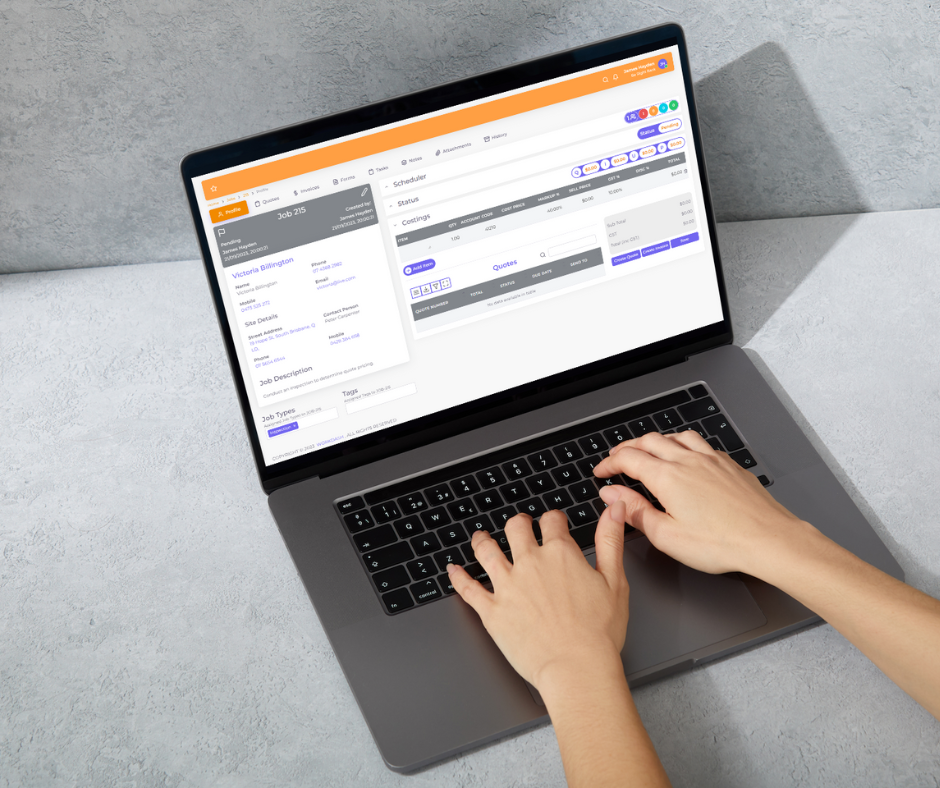
A CRM system into your business software removes silos by consolidating customer data alongside jobs, invoices, tasks, and communications. This creates a single source of truth for the entire customer relationship.
When teams can see job history, payment status, notes, and communication in one place, they deliver more consistent service. This strengthens customer relationships and improves the overall customer experience.
WorkDash embeds CRM directly into its business management platform, allowing teams to manage customers in context. This ensures nothing falls through the cracks and every customer interaction builds trust.
Can CRM Automation Really Improve Customer Engagement?
Yes—when used correctly, automation is one of the most powerful ways to improve customer engagement. CRM automation reduces manual effort while ensuring timely, consistent communication.
Businesses can automate follow-ups, reminders, onboarding messages, and re-engagement campaigns based on customer behaviour. This keeps customers informed without overwhelming teams.
By using automation thoughtfully, businesses improve responsiveness, reduce delays, and create a more proactive customer journey—all of which directly impact retention rates.
Managing the Entire Customer Journey in One Place
Retention depends on managing the full customer journey, not just individual touchpoints. From first enquiry to repeat business, every stage influences whether customers stay or leave.
A built-in CRM allows businesses to track the entire journey—from initial contact and onboarding, through delivery and support, to long-term engagement. This visibility helps teams identify friction points early.
With a clear view of the entire customer, businesses can deliver smoother experiences, resolve issues faster, and strengthen loyalty over time.
Using Customer Data to Keep Customers and Reduce Churn
Accurate customer data is the foundation of effective retention strategies. Without it, businesses rely on assumptions rather than insights.
A CRM system helps consolidate customer data, track interactions, and identify patterns that signal churn risk. For example, reduced engagement, late responses, or repeated issues can indicate dissatisfaction.
By using CRM data to act early, businesses can address problems before customers leave—turning potential churn into renewed loyalty.
CRM for Customer Retention vs Customer Acquisition
While CRM supports customer acquisition, its real power lies in retention. Acquiring customers fills the pipeline, but retention builds profitability.
CRM enables businesses to keep customers by maintaining consistent communication, delivering personalised experiences, and recognising loyal behaviour.
Retention strategies supported by CRM include proactive follow-ups, tailored campaigns, and improved customer support—each reinforcing long-term relationships rather than one-off transactions.
Best CRM Practices for Improving Client Retention
Improving client retention requires more than software—it requires consistent processes supported by the right tools. Best practices include:
Using CRM to document every interaction, ensuring continuity across teams.
Automating follow-ups so customers never feel forgotten.
Using CRM insights to personalise communication and offers.
A modern CRM embedded in business software supports these practices naturally, making retention part of daily operations rather than a separate initiative.
Why CRM Inside Business Software Drives Long-Term Success
CRM delivers the greatest value when it’s part of a broader business platform. This integration ensures CRM data informs operations, service delivery, and decision-making.
WorkDash uses CRM as a core capability—not an add-on—allowing teams to manage customers, tasks, and workflows in one place. This creates stronger alignment between service delivery and customer expectations.
By embedding CRM into everyday work, businesses improve customer retention, enhance loyalty, and support long-term business success without ERP complexity.
Key Benefits of CRM Built Into Business Software
Improves customer retention and loyalty
Centralises customer data and interactions
Enhances customer engagement through automation
Strengthens customer relationships across teams
Reduces customer churn through early insights
Supports personalised communication at scale
Improves consistency across the customer journey
Helps businesses keep customers longer
Increases customer lifetime value
Drives sustainable, long-term growth
Final Thoughts
When it comes to customer retention, tools alone aren’t enough—context matters. A CRM system that’s disconnected from daily operations limits its impact. But when CRM is built directly into your business software, it becomes a powerful driver of engagement, loyalty, and retention.
WorkDash’s integrated CRM helps businesses manage customer relationships where work actually happens. By consolidating data, automating engagement, and supporting retention strategies, it turns customer management into a competitive advantage—not just a database.
If improving customer retention is a priority, the answer isn’t more tools—it’s better integration.