Table of Contents
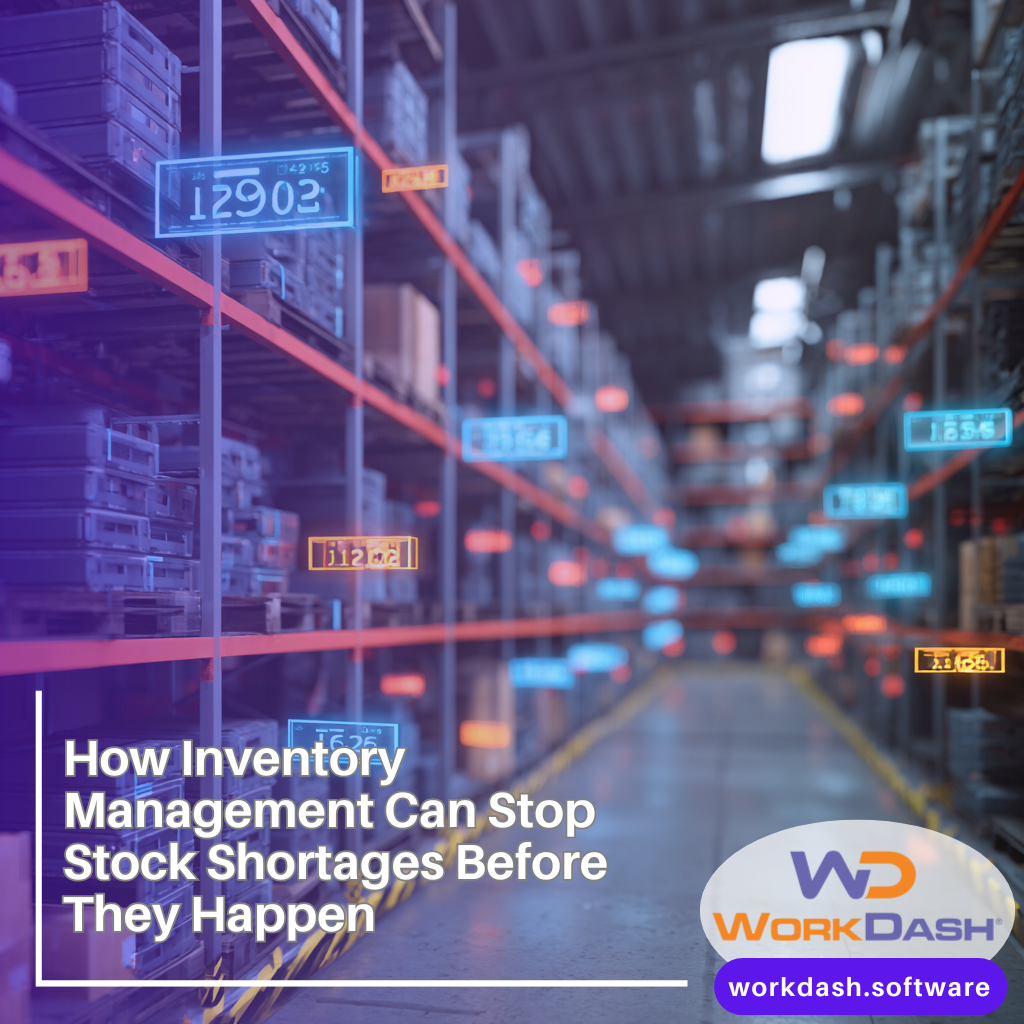
How Inventory Management Can Stop Stock Shortages Before They Happen
Stockouts don’t just happen overnight—they’re usually the result of gaps in planning, visibility, or systems. For service and product-based businesses alike, a single shortage can disrupt operations, frustrate customers, and damage cash flow. This is why proactive inventory management is no longer optional.
In this in-depth guide, we explore how modern inventory management practices help businesses prevent stockouts, maintain optimal stock levels, and protect their supply chain before problems arise. You’ll learn why stockouts occur, how safety stock works, and how a modern management system like WorkDash supports inventory visibility—without being an ERP.
If you want to manage your inventory more effectively and avoid last-minute shortages, this article is worth reading.
Article Outline
What Are Stockouts and Why Do They Matter?
The Real Causes of Stockouts in Growing Businesses
How Inventory Management Prevents Shortages
The Role of Safety Stock in Preventing Inventory Shortage
Supply Chain Disruptions and Inventory Risk
Why Stock Levels and Inventory Levels Must Be Visible
Inventory Systems vs Manual Tracking
How to Prevent and Manage Stockouts Proactively
Using Real-Time Inventory to Avoid Stockouts
Key Takeaways: Preventing Stockouts Before They Happen
What Are Stockouts and Why Do They Matter?
Stockouts occur when an item is out of stock and unavailable to meet demand. While it may sound simple, the consequences of stockouts can be severe. Customers lose trust, sales are delayed or lost, and teams are forced into reactive decision-making.
For many businesses, repeated stockouts signal deeper problems in inventory management. Poor forecasting, lack of visibility, or disconnected systems often lead to inventory shortages happening again and again.
Understanding stockouts and their impact is the first step toward building systems that prevent shortages rather than reacting to them.
The Real Causes of Stockouts in Growing Businesses
There are many causes of stockouts, but most fall into a few predictable categories. Poor inventory management practices, inaccurate demand forecasting, and delayed supplier deliveries frequently contribute to shortages.
Another major cause is lack of visibility across the supply chain. When businesses don’t know their current inventory level or stock levels in real time, they often order too late—or not enough.
Labor shortages, data errors, and manual processes also contribute to stockouts. These issues compound as businesses grow, increasing the risk of inventory shortages happening unexpectedly.
How Inventory Management Prevents Shortages
Effective inventory management is about anticipating demand and aligning supply accordingly. When done properly, inventory management processes ensure the right amount of inventory is available at the right time.
Modern inventory management strategies focus on tracking inventory accurately, monitoring trends, and adjusting replenishment schedules proactively. This approach reduces the risk of stockouts and excess inventory.
Using a centralized management system allows businesses to optimize inventory and make informed decisions rather than relying on guesswork.
The Role of Safety Stock in Preventing Inventory Shortage
Safety stock acts as a buffer against uncertainty. It protects businesses from demand spikes, supplier delays, and supply chain disruptions that could otherwise lead to stockouts.
Determining the right amount of safety stock requires understanding lead times, demand variability, and service level targets. Too much safety stock leads to excess inventory and higher costs, while too little increases the risk of stockouts.
Using a safety stock formula and maintaining appropriate safety stock levels is a proven way to prevent inventory shortage while keeping inventory costs under control.
Supply Chain Disruptions and Inventory Risk
Modern businesses operate in increasingly complex supply chains. Supply chain disruptions—from shipping delays to labor shortages—can quickly lead to stockouts if inventory isn’t managed proactively.
Effective supply chain management relies on visibility and flexibility. Businesses need systems that can respond quickly when disruptions occur.
By maintaining safety stock and monitoring supply chain signals, companies can mitigate stockouts before they impact customers.
Why Stock Levels and Inventory Levels Must Be Visible
Visibility is the foundation of effective inventory management. Without accurate data on stock levels and inventory on hand, businesses are operating blind.
Tracking inventory levels across locations, warehouses, or job sites ensures teams know when to replenish inventory and avoid low stock situations.
Modern inventory management systems provide real-time inventory, enabling businesses to identify potential stockouts before they occur.
Inventory Systems vs Manual Tracking
Spreadsheets and manual tracking may work early on, but they often lead to errors and delayed responses. Poor inventory management practices result in inaccurate data and missed reorder points.
An inventory management system centralizes inventory data, automates updates, and provides alerts for low stock levels. This significantly reduces the risk of stockouts.
While WorkDash is not a warehouse management system or ERP, it supports inventory tracking and inventory data visibility as part of a broader business management platform.
How to Prevent and Manage Stockouts Proactively
To prevent and manage stockouts, businesses must move from reactive to proactive inventory management practices. This includes setting reorder points, using automated alerts for low stock, and monitoring inventory performance regularly.
Effective inventory management also means understanding demand patterns and adjusting stock levels accordingly. Replenish inventory before it becomes critical—not after shortages occur.
By focusing on prevention, businesses reduce the operational and financial consequences of inventory shortages.
Using Real-Time Inventory to Avoid Stockouts
Real-time inventory tracking is one of the most effective ways to avoid stockouts. When inventory levels in real time are visible, businesses can respond immediately to changes in demand or supply.
Real-time inventory allows teams to track inventory in real time, optimize their inventory, and maintain optimal inventory levels across locations.
Modern inventory management software supports these capabilities, helping businesses reduce the risk of stockouts without adding complexity.
Key Takeaways: Preventing Stockouts Before They Happen
Stockouts are often caused by poor inventory management and lack of visibility
Maintaining accurate inventory levels is essential
Safety stock protects against demand spikes and supply chain disruptions
Real-time inventory tracking helps identify potential stockouts early
Supply chain disruptions increase the risk of shortages
Manual tracking contributes to poor inventory management practices
Automated alerts for low stock levels reduce risk
Preventing stockouts requires proactive inventory management strategies
Excess inventory is just as costly as shortages
Modern inventory management systems support smarter decision-making
Final Thought
Stockouts don’t have to be inevitable. With the right inventory management practices, visibility into stock levels, and thoughtful use of safety stock, businesses can stop shortages before they happen. Platforms like WorkDash, while not an ERP, help centralize inventory data within a broader business management context—giving teams the clarity they need to prevent stockouts and keep operations running smoothly.