Table of Contents
Why Business Owners Are Ditching Paperwork for Digital Forms
Paperwork has been a necessary evil in business for decades—but that’s rapidly changing. Today, more business owners are choosing to ditch paper, embrace digital forms, and move toward a truly paperless office. This shift isn’t just about convenience; it’s about transforming workflows, improving productivity, reducing risk, and future-proofing operations.
In this article, we explore why business owners are ditching paperwork for digital forms, how paper-based processes slow organisations down, and how modern platforms like WorkDash help businesses go digital without becoming an ERP. If you’re looking to transform your workflows, reduce inefficiency, and boost productivity, this guide is worth reading.
Article Outline
Why the Traditional Paper Form Is Holding Businesses Back
What Is a Digital Form and How Does It Replace Paper Forms?
How Going Paperless Improves Productivity and Workflow
From File Cabinets to Digital Systems: The End of Physical Storage
How Digital Forms Enable Workflow Automation
Why Paperless Offices Are More Secure Than Paper-Based Systems
Digital Forms in Critical Processes Like Permit to Work
The ROI of Making the Switch to Digital
Digital Transformation Without ERP Complexity
Making the Switch: Best Practices for Going Paperless
Why the Traditional Paper Form Is Holding Businesses Back
The paper form has long been the backbone of many business processes—but it’s also one of the biggest sources of inefficiency. Paper-based workflows rely on printing, handwriting, scanning, filing, and manual approvals, all of which consume precious time and introduce errors.
Businesses that continue to use paper often struggle with slow workflows, misplaced documents, and inconsistent data. Paper documents move slowly through an organisation, creating bottlenecks and reducing visibility across teams.
As organisations grow, these problems scale rapidly. What once worked for a small team becomes cumbersome, costly, and prone to mistakes—pushing many business owners to ditch the paper entirely.
What Is a Digital Form and How Does It Replace Paper Forms?
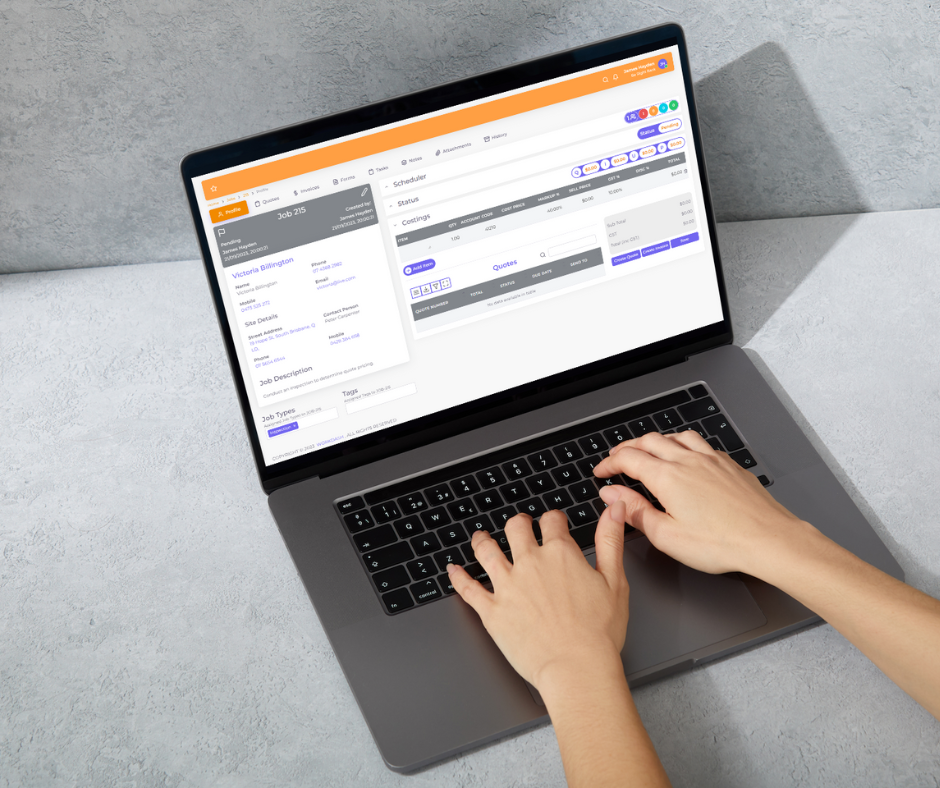
A digital form is the modern alternative to a paper form. Instead of filling out physical paperwork, users complete forms digitally on a computer, tablet, or mobile device. These forms feed directly into a digital system, eliminating the need for printing or scanning.
Unlike traditional paper-based processes, a digital form ensures consistent data, improves data quality, and allows information to be processed instantly. There’s no illegible handwriting, missing fields, or lost pages.
With platforms like WorkDash, digital forms are seamlessly connected to workflows, approvals, onboarding, and document management—making them far more powerful than static paper forms.
How Going Paperless Improves Productivity and Workflow
One of the biggest reasons businesses go paperless is improved productivity. Digital workflows eliminate delays caused by manual handling, physical movement of documents, and waiting for signatures.
When businesses ditch paper, they can automate approvals, notifications, and data routing. This reduces inefficiency and helps teams make faster decisions with real-time information.
A paperless workflow also allows teams to collaborate seamlessly, whether they’re in the office or remote. Digital workflows ensure tasks move forward without being tied to physical documents.
From File Cabinets to Digital Systems: The End of Physical Storage
Walk into any traditional office and you’ll see file cabinets, folders, and storage rooms filled with paper files. These take up valuable office space and make document retrieval slow and frustrating.
A paperless office replaces cabinets and physical storage with secure electronic documents. Files are searchable, accessible, and organised automatically—no more digging through drawers or cabinets.
Moving away from physical documents not only improves efficiency but also reduces costs associated with storage, printer toner, paper consumption, and office real estate.
How Digital Forms Enable Workflow Automation
Digital forms are the foundation of workflow automation. Once data is captured digitally, businesses can automatically route it for approval, trigger notifications, or update records across systems.
Instead of relying on manual processes, organisations can automate repetitive tasks such as onboarding, compliance checks, and internal requests. This saves time and reduces human error.
With WorkDash, digital forms integrate directly into workflows—allowing businesses to streamline approvals, track progress, and gain full visibility into operations without ERP complexity.
Why Paperless Offices Are More Secure Than Paper-Based Systems
Contrary to popular belief, paper systems often pose greater security risks than digital ones. Paper documents can be lost, stolen, or accessed without authorization, leading to potential data breaches.
A digital system provides enhanced security through access controls, encryption, and audit trails. Businesses can control who sees what, track changes, and prevent unauthorized access.
Paperless offices also reduce the risk of compliance breaches caused by missing or outdated documents—making digital transformation a smart move for risk management.
Digital Forms in Critical Processes Like Permit to Work
Processes like permit to work highlight the dangers of paper-based systems. Paper permits can be delayed, misplaced, or completed incorrectly, creating safety and compliance risks.
Using digital forms for permits ensures approvals happen quickly and records are stored securely. Digital permits can include mandatory fields, digital signatures, and automated approvals.
By digitizing high-risk processes, businesses improve safety, accountability, and operational efficiency—all while reducing paperwork.
The ROI of Making the Switch to Digital
The ROI of going paperless is clear. Businesses save money on printing, toner, storage, and manual labor while gaining faster workflows and better data.
Reduced paper usage lowers energy consumption, paper manufacturing demand, and carbon emissions, delivering strong environmental benefits alongside cost savings.
More importantly, businesses gain time back—allowing teams to focus on high-value work instead of paperwork.
Digital Transformation Without ERP Complexity
Many business owners avoid digital transformation because they fear complex ERP systems. But going paperless doesn’t require an ERP.
WorkDash offers digital forms, workflows, and automation as part of a business management platform, not an ERP. This makes it easier to adopt, configure, and scale.
Businesses can digitize processes, improve productivity, and modernize operations without heavy implementation or disruption.
Making the Switch: Best Practices for Going Paperless
Transitioning to digital doesn’t have to be overwhelming. Start by identifying the most time-consuming paper-based processes and replacing them with digital forms.
Train staff, standardize workflows, and apply best practices for document management and approvals. Focus on processes like onboarding, approvals, and internal requests first.
By taking a structured approach, businesses can successfully switch to digital, improve efficiency, and build a sustainable paperless office.
Key Takeaways: Why Businesses Are Ditching Paperwork
Paper forms slow down workflows and reduce productivity
Digital forms improve data quality and consistency
Paperless offices save time, space, and costs
Workflow automation reduces manual processes
Digital systems offer stronger security than paper
File cabinets and physical storage are obsolete
Digital permits improve safety and compliance
Going paperless delivers strong ROI
WorkDash enables digital transformation without ERP
Less paper means better efficiency and sustainability
Final Thoughts
Business owners are no longer asking if they should go paperless—they’re asking how fast. By choosing digital forms and automated workflows, organisations can ditch paper, transform operations, and build smarter, more agile businesses.
WorkDash helps businesses move beyond paperwork into efficient digital workflows—without the complexity of an ERP—making it easier than ever to embrace the power of digital.